

If you are planning a trip to Labuan Bajo between December and February, you have probably fallen into the classic rainy-season tug-of-war. On one tab, you see viral photos of emerald-green ridges on Padar Island and divers floating beside trains of giant manta rays; on the next, you read forum warnings about sudden squalls, canceled boats, and harbor closures. Most tour agencies gloss over the weather risks just to secure a deposit—leaving travelers anxious until the morning they step onto the pier.
At the same time, the reality on the Flores Sea is far more nuanced than a simple "open" or "closed" label. Wet-season sailing in Komodo National Park rewards travelers who understand how the northwest monsoon shapes marine life, why larger traditional wooden Phinisi vessels handle transitional swells differently from small day boats, and how Labuan Bajo's Harbormaster (KSOP) enforces official safety permits.
Quick Answer (2026–2027 Wet Season): Yes, you can sail Komodo National Park from December through February—and it is actually peak Manta Ray season alongside lush green hills and far fewer crowds. However, because the northwest monsoon can trigger temporary KSOP harbor sailing holds (especially late December to January), you should book a larger, well-ballasted VIP/Deluxe Phinisi or Luxury Phinisi with sheltered Central/South route flexibility, add 1–2 buffer days in Labuan Bajo, confirm written reschedule terms, and secure your 2026 SiOra daily park permit ahead of arrival.
1. What Actually Happens in Komodo (December – February)
Unlike Jakarta or Bali during heavy monsoon weeks, Labuan Bajo sits in a semi-arid rain shadow. Rain in December, January, and February usually arrives as dramatic afternoon or overnight tropical downpours rather than non-stop grey drizzle—often leaving crisp, clear mornings for hiking and snorkeling.
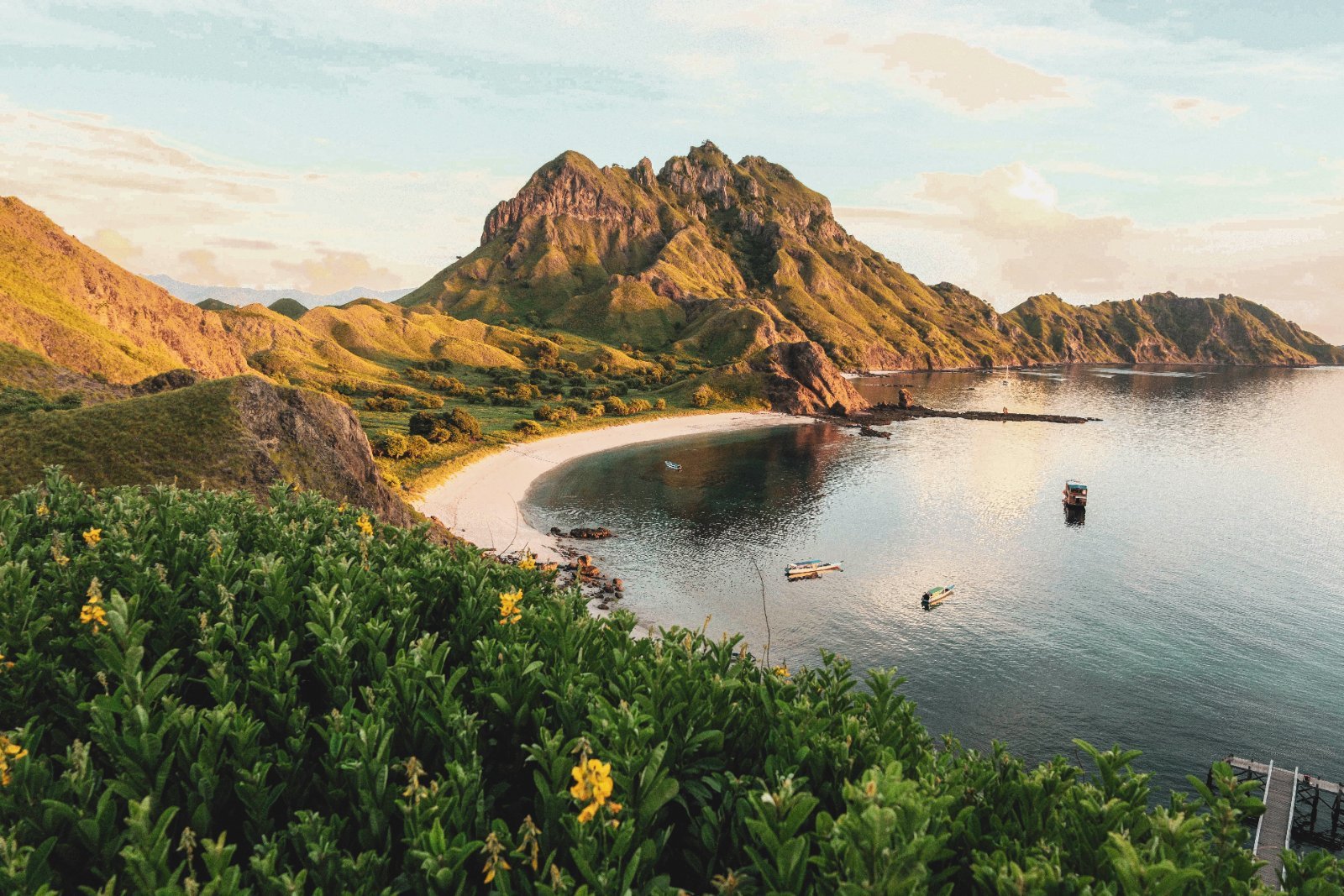
- Emerald-Green Landscapes: From late November onward, the dry golden savannas of Padar Island and Kelor Island transform into vibrant green hillsides.
- Significantly Fewer Crowds: Outside the Christmas–New Year peak week, anchorages at Pink Beach and Padar trailheads feel noticeably quieter than July–August.
- Off-Peak Cabin Value: Outside festive surcharges, many 3D2N Phinisi liveaboard vessels offer smoother cabin availability and seasonal promos—see our 2026 3-Day Komodo Budget Breakdown for baseline rates.
- Warmer Water & Shifting Visibility: Surface temperatures sit comfortably around 27–29°C, though plankton blooms can reduce underwater visibility to 10–15 meters while attracting massive marine life.

2. Peak Manta Ray Season: Why Divers & Snorkelers Love Dec–Feb
While dry-season travelers chase mirror-flat seas (see our Month-by-Month Komodo Season Guide), marine biologists and repeat liveaboard guests target the wet season for one reason: manta rays. The northwest monsoon pushes nutrient-dense currents through the park's channels, triggering plankton blooms that draw reef mantas (Mobula alfredi) to shallow feeding and cleaning stations.
- Central Komodo (Manta Point / Karang Makassar): Wide, shallow coral-rubble drift channels where snorkelers and divers routinely spot multiple mantas gliding just below the surface.
- South Komodo (Manta Alley): When wind direction permits, colder upwellings in Horseshoe Bay create some of the highest manta concentrations in Indonesia.
- Sheltered Reef Alternatives: On breezier afternoons, captains pivot seamlessly to protected bays around Manjarite Island and Siaba Besar, keeping snorkel sessions calm and turtle-filled.
3. KSOP, BMKG & SPB Sailing Permits Explained (Why Trust Matters)
Understanding maritime governance in Labuan Bajo protects both your safety and your holiday budget. Every commercial vessel—whether a Phinisi liveaboard or a 1-day speedboat—must hold an active SPB (Surat Persetujuan Berlayar) issued by KSOP Class III Labuan Bajo (the official Harbormaster and Port Authority) based on real-time BMKG maritime weather bulletins.
During strong northwest wind gusts in late December and January, KSOP can issue temporary sailing holds—either restricting open-water routes to exposed northern pinnacles or pausing all departures for 24–72 hours until swell height drops. When this happens, licensed operators obey the suspension immediately. Never board any boat whose broker claims they can "sneak out" during an active KSOP ban—doing so is illegal, voids marine insurance, and compromises passenger safety.
4. Vessel & Route Comparison for Wet-Season Sailing (2026–2027)
Not all boats handle December–February sea conditions equally. Larger, heavy-timber Phinisi hulls provide far greater stability and onboard comfort during transitional swells than lightweight day boats:
| Vessel / Option Tier | Wet-Season Sea Stability | Route Flexibility & Comfort | 2026–2027 Verified Rate Guide |
|---|---|---|---|
| Luxury Phinisi Vessels (e.g., Yumana, Lamborajo 2, Gandiva, Marea) | High — heavy wooden hull, twin-engine power, seasoned captains | En-suite ocean suites, covered lounges during tropical showers, sheltered Central/South rerouting | Rp 5,200,000 – 8,600,000+ / pax (Open Trip) or Private Charter |
| VIP & Deluxe Phinisi Vessels (e.g., Yukai, NK Jaya 1, Alfathran, Amore) | Good — balanced multi-deck Phinisi build for 3D2N crossings | Private AC cabins, indoor dining deck, flexible island sequencing around wind windows | Rp 3,250,000 – 4,750,000 / pax (3D2N Open Trip) |
| Private Phinisi Charter (Families & Groups) | High — tailored departure timing around morning calm windows | Full control over wake-up times, kid-friendly sheltered bays, custom chef menu | From Rp 39,000,000+ / boat (3D2N full-vessel charter) |
| 1-Day Speedboat / Open-Deck Boat | Moderate to Low in chop — more sensitive to afternoon wind gusts | Zero indoor cabin shelter if rain hits; less flexible if outer straits close | Rp 1,250,000 – 1,500,000 / pax (Full-Day) |
| Flores Overland Package (Plan B if KSOP closes harbor) | 100% Weatherproof from sea swells (land transport) | Private SUV + local guide to Cunca Wulang or Wae Rebo Village | Custom 1D–5D Overland Package rates |
5. 5 Smart Rules for Booking Dec–Feb Without Stress
- Build a 1–2 Day Labuan Bajo Buffer: Never book a same-day flight into LBJ and straight onto a boat, or a tight return flight. Stay one night pre- and post-cruise—use our Labuan Bajo Hotel & Sunset Guide to pick a great waterfront base.
- Ask for Written KSOP Reschedule & Refund Policies: Before paying a deposit, ask your operator directly: "What happens if KSOP suspends SPB permits on our departure date?" Reputable operators clearly outline free rescheduling, credit options, or partial refunds.
- Book Early for SiOra Daily Quotas: Even during the wet season, Komodo National Park enforces its strict 1,000-visitors/day cap via the SiOra digital permit system—meaning Christmas, New Year, and Lunar New Year dates still sell out weeks in advance.
- Pack for Quick Tropical Showers: Bring a lightweight packable rain jacket, dry bag for cameras, reef-safe sunscreen, and a 3mm wetsuit top if you get chilly during longer manta drifts.
- Have a Flores Overland Plan B Ready: If a rare 48-hour port closure hits, you do not have to sit idle in your hotel—pivot smoothly into a Flores Overland Package covering Cunca Wulang Waterfall, traditional Manggarai villages, or an overnight Waerebo 2D1N Package.
Frequently Asked Questions
Is it safe to sail Komodo National Park in December, January, or February?
Yes—sailing is safe when booked through a licensed operator that strictly follows KSOP Labuan Bajo SPB permits and BMKG weather advisories, especially aboard larger VIP or Luxury Phinisi vessels operating sheltered Central and South Komodo routes.
What happens to my Phinisi booking if KSOP closes Labuan Bajo harbor due to bad weather?
When KSOP suspends SPB sailing permits, no legal tourist vessel may depart. With Florex.id, our local Labuan Bajo team monitors BMKG bulletins 24–48 hours ahead and coordinates transparent date shifts, route adjustments to approved sheltered bays, or alternative Flores Overland Packages depending on the vessel's official policy.
Are manta rays really better in the rainy season?
Yes—December through March is widely considered peak manta ray season in Komodo because northwest monsoon currents bring plankton-rich water into Manta Point and Manta Alley, attracting large groups of reef mantas for feeding and cleaning.
Should I still reserve SiOra Komodo park tickets in advance during the wet season?
Yes—since April 2026, Komodo National Park enforces a hard daily quota of 1,000 visitors with zero walk-in gate tickets, so passport details must be registered on SiOra before boarding regardless of season.
Sources
Florex.id 2026–2027 Verified Master Fleet & Cabin Database (Luxury, VIP/Deluxe & Private Phinisi tiers); Komodo National Park (BTNK) 2026 SiOra daily quota regulations; BMKG & KSOP Class III Labuan Bajo SPB maritime operating protocols.